You’re TIG welding and the tungsten keeps slipping out of the collet. You tighten the back cap, it holds for a few seconds, then slides again. The arc starts inconsistent, the puddle wanders, and your bead looks rough. The problem isn’t the tungsten—it’s a worn collet body that can’t grip anymore.
Key Takeaways
Tungsten slipping is almost always caused by a worn or damaged collet body, not the tungsten itself
A collet body wears from repeated insertion and removal of tungsten
Replacement collet bodies are cheap ($5–$15) and take 30 seconds to swap
Gas coverage improves dramatically with a fresh collet body
Keep spares on hand for every torch size you use
The Problem
A worn collet body shows up as:
Tungsten slides out even when the back cap is tight
Inconsistent arc initiation
Poor gas coverage (visible oxidation on the weld)
Difficulty maintaining arc length
Collet body threads are stripped or loose
The collet is a small tapered sleeve that grips the tungsten. Every time you insert or remove tungsten, the collet compresses and expands. Over hundreds of cycles, the taper wears out. The grip weakens. Eventually, no amount of back cap tightening will hold the tungsten in place.
Why It Matters
A slipping tungsten means an unstable arc. Your puddle control suffers. Weld quality drops. On precision work (aerospace, stainless, thin-wall), a wandering arc is a reject. On production runs, it’s rework and lost time. Plus, a loose tungsten can break mid-weld and contaminate your shielding gas.
The Fix
Disconnect the torch and let it cool. Safety first.
Unscrew the back cap and remove the old collet body.
Inspect the threads. If they’re stripped, you may need a new torch head (rare).
Install the new collet body. Slide it in and hand-tighten the back cap.
Insert tungsten and tighten firmly. The tungsten should not move when you pull on it.
Test the arc. You should see immediate improvement in arc stability and gas coverage.
Why This Product Solves It
The TIG Gas Lens Collet Body #17, 18, 26 Torch 2PK (45V27-1/8″) is a direct replacement for standard TIG torches and includes a gas lens design that improves shielding gas flow. The tapered bore is precision-machined to grip tungsten consistently, and the gas lens allows larger tungsten stick-out for better visibility and control. Two-pack means you have a spare.
Torch series: This fits #17, #18, and #26 torches (most common sizes)
Tungsten size: This collet is sized for 1/8″ (3.2mm) tungsten
Gas lens compatibility: Confirm your torch head accepts a gas lens (most do)
Thread type: Standard collet body threads (verify if you have an older torch)
Real-World Use
A TIG fabricator working on stainless tubing noticed poor gas coverage and arc wander. Swapped the collet body. Tungsten stayed put, arc was stable, and the bead came out clean. One collet body lasted 18 months before needing replacement.
Common Mistakes
Tightening the back cap excessively (damages the new collet body)
Using the wrong collet size for your tungsten diameter (loose fit)
Not replacing the collet body when it’s visibly worn (keeps struggling with slipping)
Forgetting to clean the collet body threads before installation (cross-threading)
Buying a single collet body instead of keeping spares (downtime when it fails)
Safety Notes
Always let the torch cool before handling. Collet bodies get hot during welding. Wear gloves when removing hot components. If tungsten slips during welding, stop immediately—a loose electrode can break and contaminate your argon supply.
Always follow the manufacturer’s instructions and your shop’s safety procedures. If you’re unsure about fitment or ratings, verify before you buy or install.
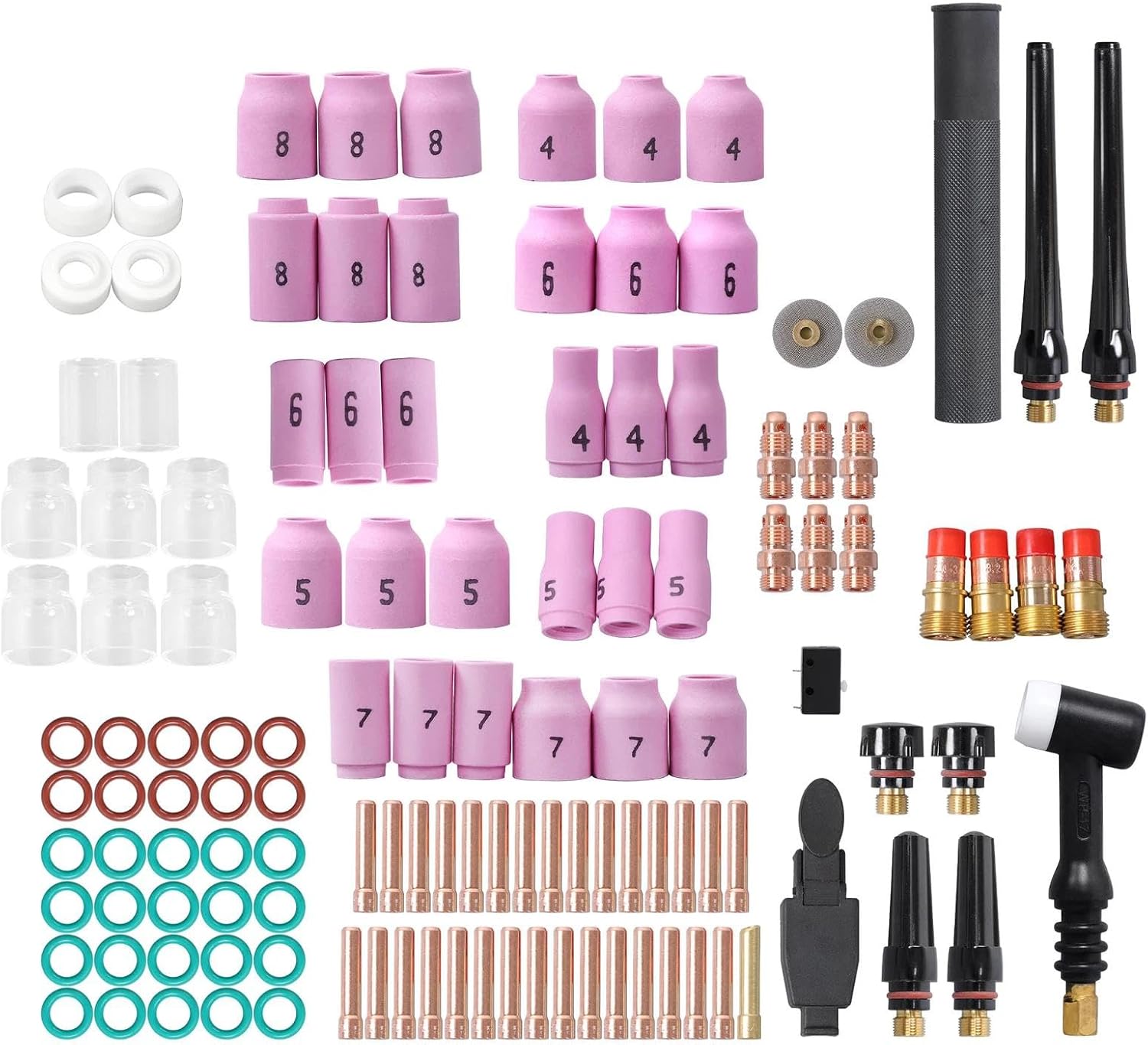
Intro: TIG torch consumables wear out fast—especially with aluminum or stainless jobs. This 123-piece kit gives WP-17/18/26 users a complete, ready-to-go stock of nozzles, collets, and gas lenses for pro-level results without the downtime of waiting for parts.
Key Takeaways
123 pieces: nozzles, collets, gas lenses, and ceramic cups for WP-17/18/26 torches
Precision-manufactured for reliable fit and consistent gas coverage
Heatproof glass cups and alumina nozzles resist cracking under high temps
Supports both AC and DC TIG work; ideal for aluminum, stainless, and mild steel
One-time stock eliminates repeated small orders and shop delays
Includes 123 pieces for TIG welding torch kit, featuring stubby lens, alumina nozzle, and collets for welding applications.
components like alumina nozzle and collets reliable performance and precise welding results with TIG torch kit 123 Pcs.
Upgrade Your Gear, Upgrade Your Performance – Choose Our Reliable Replacement Parts.
To ensure a perfect fit and make an informed decision, we encourage you to carefully review both the product’s dimensions and visually inspect it in the provided photos.
Last update on 2026-03-27 / Affiliate links / Images from Amazon Product Advertising API
Performance & Use
All parts are precision-manufactured for reliable fit and gas coverage. Designed for both AC and DC TIG work (verify for your machine). Suits most US-shop WP-17/18/26 torches.
What to compare before you buy
Torch compatibility: Verify your torch model (WP-17, WP-18, or WP-26) before ordering
Collet sizes: Kit includes 0.040″, 1/16″, 3/32″, and 1/8″ collets—confirm your electrode diameter
Glass vs. ceramic: Kit includes both heatproof glass cups and alumina nozzles; choose based on your material and duty cycle
Gas lens setup: Verify whether you run stubby or regular gas lens configuration
Storage: Check if included storage case or organizer meets your shop layout needs
Heatproof glass cups and alumina nozzles resist cracking under high temps. All collets and lenses are built for repeated use—ideal for daily welding or instructional settings. Precision tolerances ensure tight, consistent seals that minimize gas leakage and porosity.
Who It’s For
TIG welders running WP-17/18/26 torches on aluminum, stainless, or mild steel
Fabrication shops that need backup consumables in stock to avoid downtime
Instructors teaching TIG welding who need a complete parts kit for multiple torch setups
Hobbyists and pros upgrading from single-part orders to bulk stock
Quick FAQ
Q: Will this fit my torch? A: Compatible with WP-17, WP-18, WP-26 (verify torch model before ordering).
Q: Are all parts included for aluminum and stainless? A: Yes, supports both (verify machine settings and gas type).
Q: Are the cups glass or ceramic? A: Both heatproof glass and alumina nozzles included.
Q: Can I use this for AC and DC TIG? A: Yes (verify for your machine).
Q: Does it include a storage case? A: Unknown (Verify on listing).
Safety Notes
Always allow torch to cool before handling consumables
Inspect collets and gas lenses for cracks or damage before use; replace if compromised
Verify gas flow and coverage before starting production welds
Follow ANSI Z49.1 safety standards for TIG welding
Your TIG welds are starting to show porosity or inconsistent gas coverage. You’ve checked your argon flow, regulator pressure, and torch angle. Everything checks out—except the welds still look rough.
The problem might be hiding in plain sight: a cracked or worn gas lens cup.
A damaged gas lens cup disrupts shielding gas flow, allowing air to contaminate the weld pool. Even a hairline crack can cause porosity that ruins structural welds. Unlike contact tips, gas lens cups get less attention—but they’re just as critical.
Key Takeaways
Cracked or worn gas lens cups allow air into the shielding gas stream
Porosity, discoloration, and rough beads are signs of gas coverage failure
Gas lens cups wear faster with high amperage or prolonged duty cycles
Replacement is quick and inexpensive—$2–$8 per cup
Proper fitment requires matching your torch size and collet type
The Problem
A gas lens cup (also called a ceramic cup or nozzle) sits at the end of your TIG torch and directs shielding gas around the weld pool. Over time, thermal cycling and spatter impact cause:
Cracks: Hairline fractures that let air seep in
Erosion: The ceramic wears thin, reducing gas flow efficiency
Discoloration: Brown or white deposits indicate heat stress and gas leakage
Porosity: Air contamination creates gas pockets in the weld
A cracked cup might look minor, but even a 1mm hairline fracture is enough to ruin a structural weld.
Why It Matters
Porosity from a bad gas lens cup is expensive:
Rework: Cutting out and re-welding porosity costs hours of labor
Inspection failures: Radiographic or ultrasonic testing will reject porosity
Safety risk: Porosity weakens the joint and can cause failure under load
Material waste: Scrap parts and wasted filler material
Reputation: Failed welds on customer parts damage trust
A $5 replacement cup prevents all of this.
The Fix
Replace your gas lens cup as part of routine torch maintenance:
Stop the welder and let the torch cool (5–10 minutes for high-amperage work)
Unscrew the nozzle from the torch head (usually hand-tight or with a small wrench)
Remove the collet body (the small metal piece holding the cup)
Slide out the old cup and inspect the collet body for damage
Install the new cup (check the size: 3/8″, 7/16″, 1/2″, etc.)
Re-assemble: Collet body → new cup → nozzle
Hand-tighten and resume welding
Total time: 3–5 minutes.
Why This Product Solves It
The CK TIG Gas Lens Collet Body (available in multiple sizes) is a precision replacement for standard TIG torches (#17, #18, #26). It includes the collet body and gas lens cup assembly, ensuring proper gas flow and consistent shielding.
Key benefits:
Precision fit: Engineered for standard torch sizes
Improved gas coverage: Larger diameter design provides better shielding gas distribution
Compatibility: Works with most standard TIG torches
Affordable: Packs of 2 cover extended service intervals
Replace every 100–200 hours of welding or immediately if you see porosity or discoloration.
What to Check Before You Buy
Torch size: Standard torches are #17, #18, or #26 (small torches are #9, #20, #24W, #25)
Cup size: Available in 3/8″ (3/32″), 7/16″ (1/8″), 1/2″ (5/32″), and larger
Collet type: Standard collet body vs. gas saver (gas saver is more efficient but less common)
Fitment: Unknown (Verify) — confirm your torch model and cup size before ordering
Real-World Use
A stainless steel fabrication shop doing heavy TIG work at 150–200 amps noticed porosity on every other weld. They replaced the gas lens cup and the porosity disappeared. The old cup had a hairline crack invisible to the naked eye. Now they replace cups every 150 hours as preventive maintenance.
Common Mistakes
Ignoring discoloration: Brown or white staining on the cup is a sign of gas leakage—replace it immediately
Wrong cup size: Installing a 3/8″ cup on a 1/2″ collet body leaves gaps and allows air in
Over-tightening the nozzle: Hand-tight is enough; over-tightening can crack the cup
Not cleaning the torch head: Spatter and oxidation on the torch head can interfere with gas flow—clean it when you replace the cup
Waiting for complete failure: Replace cups at the first sign of porosity, not after multiple failed welds
Safety Notes
Always wear ANSI Z87.1-rated safety glasses or a helmet when welding
Let the torch cool for 5–10 minutes before removing the cup—ceramic cups retain heat and can cause burns
Never touch the cup or nozzle immediately after welding
Always follow the manufacturer’s instructions and your shop’s safety procedures. If you’re unsure about fitment or ratings, verify before you buy or install.
Where to Buy
Available at ArcWeld.store (stock and shipping: Unknown – verify)