Tag: structural welding

  • 6010 Electrode vs 7018 Electrode: What Welders Need to Know

    6010 Electrode vs 7018 Electrode: What Welders Need to Know

    6010 and 7018 are two of the most widely used stick electrodes in the welding industryโ€”but they serve very different purposes. One is built for speed, penetration, and root passes. The other is designed for high strength, low hydrogen, and structural work.

    If youโ€™ve ever wondered โ€œWhich rod should I use?โ€ this guide breaks down the differences in arc characteristics, penetration, polarity, strength, and code applications.


    Key Takeaways

    • 6010 = deep penetration, fast-freeze, open-root king
    • 7018 = high-strength, low-hydrogen, structural standard
    • 6010 runs on DCEP only (most cases)
    • 7018 runs on DCEP or AC depending on formulation
    • 6010 great for pipe roots; 7018 dominates final passes and code work
    • 7018 requires low-hydrogen storage (rod oven)

    Electrode Number Meaning

    Understanding the AWS code helps explain performance.

    6010

    • 60 โ†’ 60,000 psi tensile strength
    • 1 โ†’ all positions
    • 0 โ†’ cellulose sodium coating (deep penetration)

    7018

    • 70 โ†’ 70,000 psi tensile strength
    • 1 โ†’ all positions
    • 8 โ†’ low-hydrogen iron powder coating

    Arc Characteristics

    6010

    • Aggressive, digging arc
    • Deep penetration on dirty, rusty, or painted steel
    • Fast-freeze puddle (good for open roots)
    • Tight, narrow bead
    • Strong keyhole control

    7018

    • Smooth, stable arc
    • Softer puddle with less digging
    • Easy to stack uniform, wide beads
    • Higher deposition rate
    • Excellent appearance

    Penetration & Puddle Behavior

    Feature60107018
    PenetrationVery deepModerate
    PuddleFast-freezeFill/freezer hybrid
    SlagLight, flakyThick, easy-peel
    Cleaning ToleranceExcellentNeeds clean steel

    Polarity Requirements

    6010

    • Runs best on DCEP (reverse polarity)
    • Many brands only run correctly on DCEP

    7018

    • Runs on DCEP
    • Many versions available as AC-only rods
    • 7018AC designed for buzz-box machines

    Strength & Mechanical Properties

    Property60107018
    Tensile Strength60 ksi70 ksi
    Hydrogen LevelHighLow (low-hydrogen class)
    DuctilityHighExcellent
    Code WorkLimitedStandard for structural, pressure pipe

    Best Applications

    6010 โ€“ Use When You Need:

    • Root passes on pipe
    • Welding through mill scale or contaminants
    • Deep penetration on structural members
    • Open-gap joints
    • Fast, controlled root keyholing

    7018 โ€“ Use When You Need:

    • Final passes on structural work
    • Code-quality welds (AWS D1.1, ASME, etc.)
    • High-strength welds with low hydrogen
    • Clean steel
    • Smooth, aesthetically clean beads

    Storage & Handling Differences

    6010

    • No rod oven required
    • Tolerates moisture well

    7018

    • Must be stored in a rod oven after opening
    • Cannot be used if exposed to moisture
    • Hydrogen pickup increases crack risk

    Which One Should You Use?

    Use 6010 if:

    • Youโ€™re doing pipe roots
    • The steel is dirty or rusty
    • You need fast-freeze control
    • You need maximum penetration

    Use 7018 if:

    • Youโ€™re doing structural or pressure code work
    • You need low-hydrogen welds
    • You want smooth, strong cap passes
    • The steel is clean and prepped

    Most pipeline welders run 6010 for roots and 7018 for hot passes and caps.


    Where to Buy Electrodes

    ArcWeld Store:
    6010

    7018

    Disclosure: This article contains affiliate links. As an Amazon Associate, I earn from qualifying purchases.


    Safety Notes (AWS/ANSI References)

    • Follow ANSI Z49.1 for SMAW PPE and ventilation
    • Wear Z87.1-rated eye and face protection
    • Use proper ventilationโ€”stick welding generates significant fumes
    • Handle 7018 rods per AWS low-hydrogen storage guidelines
    • Avoid welding 7018 rods that have absorbed moisture

    FAQ

    Can you run 6010 on AC?
    Some machines attempt it, but results are inconsistent. DCEP is required for proper performance.

    Is 7018 stronger than 6010?
    Yes. 7018 is a 70 ksi tensile electrode vs. 60 ksi for 6010.

    Can beginners start with 7018?
    7018 is easier to run cleanly, but its slag can hide defects. 6010 teaches puddle control.

    What rod is best for dirty steel?
    6010โ€”hands down.

  • 2025 Welder Certification Changes: What You Need to Know

    2025 Welder Certification Changes: What You Need to Know

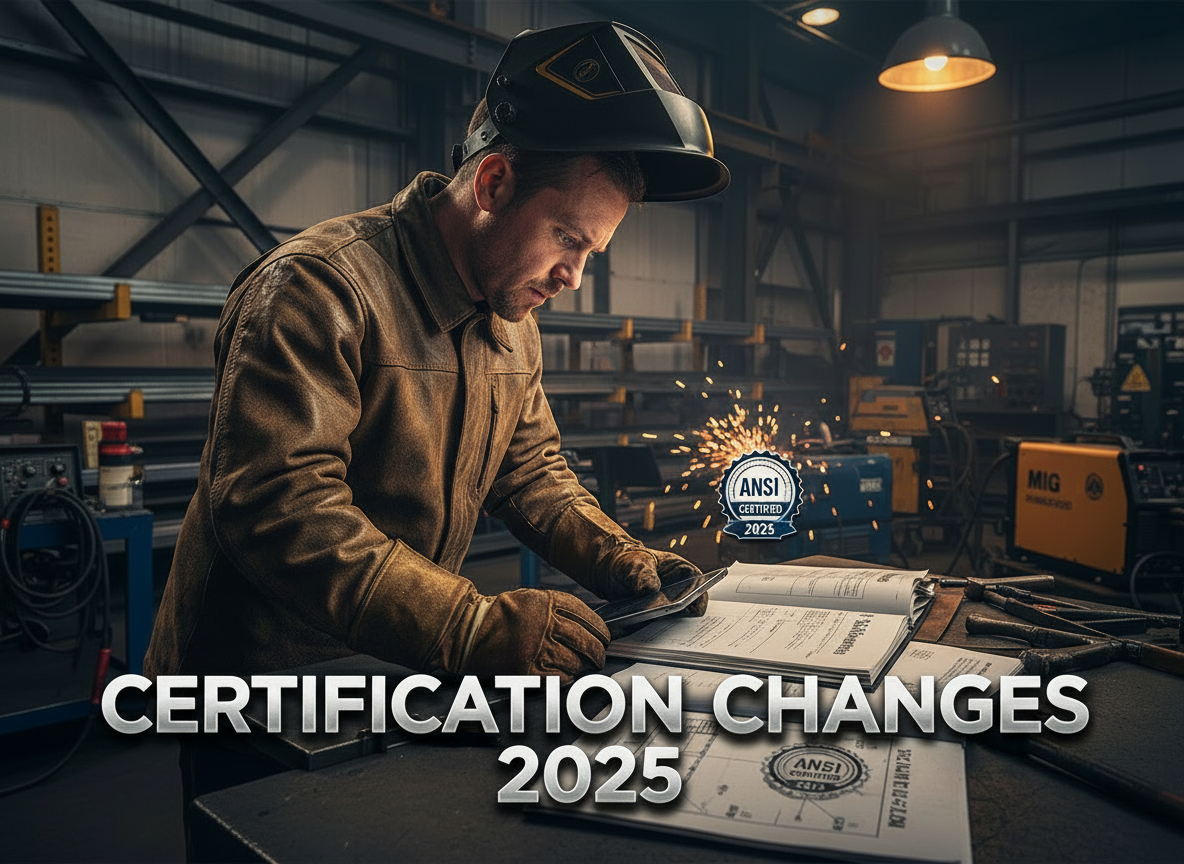
    Welding certifications are tightening in 2025. AWS, ANSI, and industry regulators have rolled out updated requirements focused on fatigue prevention, longer-term inflammation risks, exposure limits, and more robust process testing. If you were certified under pre-2025 rules, you may not meet current standards.

    Hereโ€™s what changedโ€”and what welders, shops, and buyers need to understand right now.


    Key Takeaways

    • New AWS/ANSI updates increase documentation, safety, and exposure-control requirements
    • Older certs may require renewal or supplemental testing
    • Emphasis on fatigue prevention, inflammation risk, and fume-exposure management
    • Structural, pipe, and automotive codes now reference expanded testing
    • Shops should plan for retraining and potential downtime

    What Changed for 2025

    AWS and ANSI updates donโ€™t overhaul the entire systemโ€”but several areas now demand more scrutiny.

    1. Fatigue Prevention & Ergonomics (New Focus Area)

    For the first time, AWS guidance ties welder conditioning, repetitive-strain exposure, and fatigue management to certification validity within certain shops.

    Whatโ€™s being emphasized:

    • Maximum allowable repetition cycles
    • Mandatory rest intervals for heavy-position welds
    • PPE requirements for vibration and joint stress
    • Documentation of overexertion incidents

    These arenโ€™t โ€œfitness tests,โ€ but they do affect shop compliance and jobsite audits.


    2. Chronic Inflammation & Long-Term Exposure

    ANSI Z49.1 references now highlight chronic inflammation risks from:

    • Metal fume inhalation
    • Heavy particulate exposure
    • Long-duration heat/UV exposure

    Shops are expected to update:

    • Fume extraction plans
    • Airflow documentation
    • Respiratory PPE fit-testing logs
    • Heat-stress protocols

    This ties directly into certification renewals for certain industries.


    3. Tighter Process Testing for Certification

    Across AWS D1.1 (structural), D1.3 (sheet steel), D17.1 (aerospace), and B31 pipe codes, many certs now require:

    • More detailed weld-procedure records
    • Updated documentation of parameters
    • Expanded visual exam criteria
    • New acceptance limits for cumulative defects

    Pre-2025 certifications may require requalification or supplemental weld tests.


    Old vs. New (Quick Breakdown)

    AreaPre-2025 Standard2025 Standard
    Fatigue PreventionMinimal mentionMandatory documentation + rest cycle guidelines
    Chronic Inflammation RiskGeneral fume guidanceExpanded exposure limits + detailed PPE compliance
    Fume ExtractionRecommendedRequired in most shop audits
    Cert Validity WindowsStandard intervalsSome industries shortened validity periods
    Process TestingVisual + bend testsTighter acceptance criteria and expanded documentation
    Medical Risk NotesRarely includedNow referenced in several AWS/ANSI publications

    Which Certifications Matter Most in 2025

    Different industries now lean heavily on updated standards. Hereโ€™s what welders and shops need to prioritize.

    Structural (AWS D1.1)

    Expect:

    • Stricter visual standards
    • Additional position testing for some shops
    • More documentation on parameters and heat input

    Pipe Welding (ASME / B31 Series)

    Tighter tolerance for:

    • Root reinforcement
    • Internal misalignment
    • Heat-affected zone integrity

    Automotive / Manufacturing (AWS D8/D9)

    New focus on:

    • Repetitive-strain prevention
    • Heat-stress logs
    • Exposure management for high-volume weld cells

    Aerospace (AWS D17.1)

    More stringent:

    • Visual inspection criteria
    • Traceability requirements
    • Operator-specific parameter logs

    Why It Matters for Welders

    1. Certifications from 2024 may not satisfy 2025 audit requirements

    Many shops will require updated test plates or documentation.

    2. Retraining budgets matter now

    Expect more formal training, especially around exposure prevention.

    3. Higher certification standards = higher labor rates

    Buyers should expect increased cost per hour for certified welders, especially in pipe, structural, and aerospace.


    Where to Buy Safety Upgrades

    With stricter exposure-control and fatigue-management rules, PPE and ventilation gear matter more than ever.

    ArcWeld Store PPE Essentials:
    www.arcweld.store


    Safety Notes (AWS/ANSI References)

    • Follow ANSI Z49.1 for exposure and fume-control guidelines
    • Ensure fit testing for respirators per OSHA 1910.134
    • Use NIOSH-approved PPE for metals containing Cr, Ni, Mn, or aluminum
    • Maintain proper airflow and extraction in accordance with AWS safety recommendations

    FAQ

    Do I need to retake my welding test in 2025?
    Possiblyโ€”especially for structural, pipe, and aerospace work. Many shops require updated certs.

    What if my employer still uses old standards?
    They may fail audits or be unable to bid certain jobs.

    Do these rules affect hobby welders?
    No, these updates primarily affect commercial shops and certified welders.

    How often should I renew my certification now?
    Depends on code. Some industries shortened validity windows under 2025 guidance.

Read with Kindle Unlimited