Tag: structural steel welding

  • Mill Scale on Hot-Rolled Steel: Why It Ruins Welds (And How to Remove It in 5 Minutes)

    Mill scale is the dark, brittle oxide coating on hot-rolled steel straight from the mill. It looks harmless but traps moisture and contaminants that cause porosity, weak bonds, and visible defects in your weld. Remove it before striking an arc—it takes 5 minutes and prevents hours of rework.

    Key Takeaways

    • Mill scale causes porosity, oxidation, and poor weld fusion
    • Removal takes 5 minutes with a wire cup brush or flap disc
    • Wire cup brush is fastest for flat surfaces; flap disc for edges and blending
    • Cost: $15–$40 for a quality brush; prevents $100+ in scrap
    • Safe removal requires proper PPE and grinder technique

    Quick Diagnosis

    What you observe:

    • Dark, flaky coating on new steel (especially structural or plate)
    • Weld beads with small holes or dark spots after cooling
    • Oxidation that won’t disappear even with good gas coverage
    • Weak fusion or cold welds in the heat-affected zone

    Why it happens:Mill scale forms when hot steel cools in air during manufacturing. It’s iron oxide—chemically inert but mechanically weak. When you weld over it, the scale traps hydrogen and oxygen, creating porosity. It also prevents good contact between the base metal and filler, causing cold welds.

    Safety Notes

    • Eye protection: ANSI Z87.1 safety glasses or face shield (in addition to helmet)
    • Respiratory: Dust mask or respirator (N95 minimum) when grinding; mill scale dust contains iron oxide
    • Hearing: Angle grinders are loud (100+ dB); use earplugs or earmuffs
    • Gloves & sleeves: Wear heat-resistant gloves and long sleeves; sparks will burn skin
    • Secure the work: Clamp or vice the part; never hold it by hand while grinding
    • Disconnect power: Always unplug the grinder before changing brushes or discs

    Step-by-Step Troubleshooting

    Step 1: Identify mill scale (30 seconds)

    • Look for dark gray or black coating on new hot-rolled steel
    • Rub your finger across it—it will flake or smudge
    • If it’s shiny and smooth, it’s likely just light oxidation (less critical but still remove)

    Step 2: Choose your tool (1 minute)

    • Wire cup brush: Best for flat surfaces, large areas, and speed
    • Flap disc (36–40 grit): Better for edges, corners, and blending welds
    • Grinding wheel (hard stone): For heavy scale on thick plate (slower, more aggressive)

    Step 3: Set up safely (2 minutes)

    • Clamp the part firmly in a vise or on a table
    • Put on gloves, long sleeves, and a dust mask
    • Lower your helmet or put on safety glasses
    • Plug in the grinder and check the brush/disc is tight

    Step 4: Remove the scale (2–3 minutes)

    • Start the grinder and let it reach full speed
    • Hold the brush/disc at a 45-degree angle to the surface
    • Use light to medium pressure; let the tool do the work
    • Move in overlapping passes across the entire joint area
    • Stop and inspect—the surface should be bright metal with no dark coating

    Step 5: Clean and inspect (1 minute)

    • Wipe the area with a clean cloth or brush to remove dust
    • Check for any remaining scale in corners or edges
    • If scale remains, repeat Step 4 on those spots
    • Proceed to welding within 30 minutes (oxidation will form slowly)

    Fix Options (Ranked)

    1. Wire Cup Brush (Fastest, Most Practical)

    • Cost: $15–$30 per brush
    • Time: 2–3 minutes per joint
    • Best for: Flat plate, large surfaces, production work
    • Why: Aggressive enough to remove scale quickly without gouging the base metal

    2. Flap Disc (36–40 Grit)

    • Cost: $3–$8 per disc (consumable)
    • Time: 3–5 minutes per joint
    • Best for: Edges, corners, and weld blending
    • Why: Conforms to irregular surfaces; lasts longer than wire brush on heavy scale

    3. Hard Grinding Wheel (Stone)

    • Cost: $5–$15 per wheel
    • Time: 5–10 minutes per joint
    • Best for: Very heavy scale on thick structural steel
    • Why: Removes scale faster but risks gouging; requires skill

    4. Acetone or Vinegar Soak (Slowest, Chemical)

    • Cost: $5–$10
    • Time: 4–12 hours
    • Best for: Hollow sections or tight spaces (grinder can’t reach)
    • Why: Citric acid or vinegar dissolves scale chemically; no dust or sparks

    Recommended Fix (Product Section)

    SALI 6-Pack Wire Cup Brush, 4-Inch Knotted

    A knotted wire cup brush is the fastest, most reliable way to remove mill scale before welding. This 6-pack gives you multiple brushes so you always have a sharp one ready—dull brushes slow you down and risk gouging the base metal.

    Why it works:The twisted knots create aggressive contact with the scale without damaging the underlying steel. The 4-inch size fits standard 4.5-inch angle grinders (the most common shop tool). Knotted wire (vs. crimped) stays sharp longer and handles heavy scale.

    When to use it:

    • Before welding any hot-rolled structural steel
    • Cleaning up old welds before re-welding
    • Removing rust and oxidation from stored material
    • Prep work on fabrication jobs where quality matters

    When NOT to use it:

    • On stainless steel (use stainless-safe brushes instead)
    • On aluminum or soft metals (will gouge)
    • At high RPM on thin sheet (risk of warping)
    • Without proper PPE (sparks and dust are real hazards)

    What to check before buying:

    • Arbor size: Must be 5/8″-11 UNC (standard for 4.5″ grinders)
    • Wire gauge: 0.02″ knotted steel (aggressive enough for scale)
    • Brush diameter: 4″ (fits 4.5″ grinder with clearance)
    • Pack size: 6-pack means you have backups when one wears out
    • Reviews: Look for 4+ stars from welders and fabricators

    Last update on 2026-03-27 / Affiliate links / Images from Amazon Product Advertising API

    Comparable Options

    Flap Disc Alternative (36 Grit):If you prefer a consumable disc that lasts longer and blends edges better, a 36-grit flap disc works well. Cost is similar ($3–$8 per disc), but you’ll use more discs over time. Best for finishing work and edge prep.

    Hard Grinding Wheel (Stone):For very heavy scale on thick plate, a hard grinding stone removes scale faster than wire. Cost is $5–$15, but requires more skill to avoid gouging. Not recommended for beginners.

    Common Mistakes

    • Skipping mill scale removal: Assuming good gas coverage will prevent porosity. It won’t—scale traps hydrogen regardless of shielding.
    • Using a dull brush: Dull brushes don’t cut scale; they just burnish it and slow you down. Replace brushes when they stop sparking aggressively.
    • Grinding too hard: Pressing too hard on the brush risks gouging the base metal, creating stress concentrations. Let the tool do the work.
    • Not cleaning after grinding: Dust and small scale particles can fall into the weld puddle. Wipe the area clean with a cloth before striking an arc.
    • Waiting too long after prep: Bare steel oxidizes quickly. Weld within 30 minutes of prep, or re-clean if you’ve waited longer.

    FAQ (Snippet-Optimized)

    Q: Does mill scale affect all welds?A: Yes. Mill scale traps hydrogen and oxygen, causing porosity in MIG, TIG, and stick welds. Even one small area of scale can create defects.

    Q: Can I just wire brush it by hand?A: Hand brushing removes light oxidation but not mill scale. Use a power tool (angle grinder with wire brush or flap disc) for reliable removal.

    Q: How long does mill scale removal take?A: 2–5 minutes per joint, depending on size and scale thickness. A 4-inch wire cup brush is fastest for flat surfaces.

    Q: Is mill scale the same as rust?A: No. Mill scale is factory oxide (dark, hard, flaky). Rust is corrosion (orange, porous, crumbly). Both must be removed before welding.

    Q: Can I use a wire wheel instead of a cup brush?A: Yes, but cup brushes are better. Cup brushes have more aggressive knots and stay sharp longer. Wire wheels work for light oxidation but are slower on heavy scale.

    Next Steps

    1. Inspect your next job: Before welding, run your finger across the steel. If it’s dark and flaky, it’s mill scale—remove it.
    1. Stock a wire cup brush: Keep a 6-pack of knotted wire cup brushes in your shop. They’re cheap insurance against porosity and rework.
    1. Check related posts:
    1. Explore ArcWeld.store: Browse our selection of wire brushes, flap discs, and grinder accessories at  ArcWeld.store .

    For more welding fixes and gear options, see our full resource page:  https://blog.weldsupportparts.com/links/ 
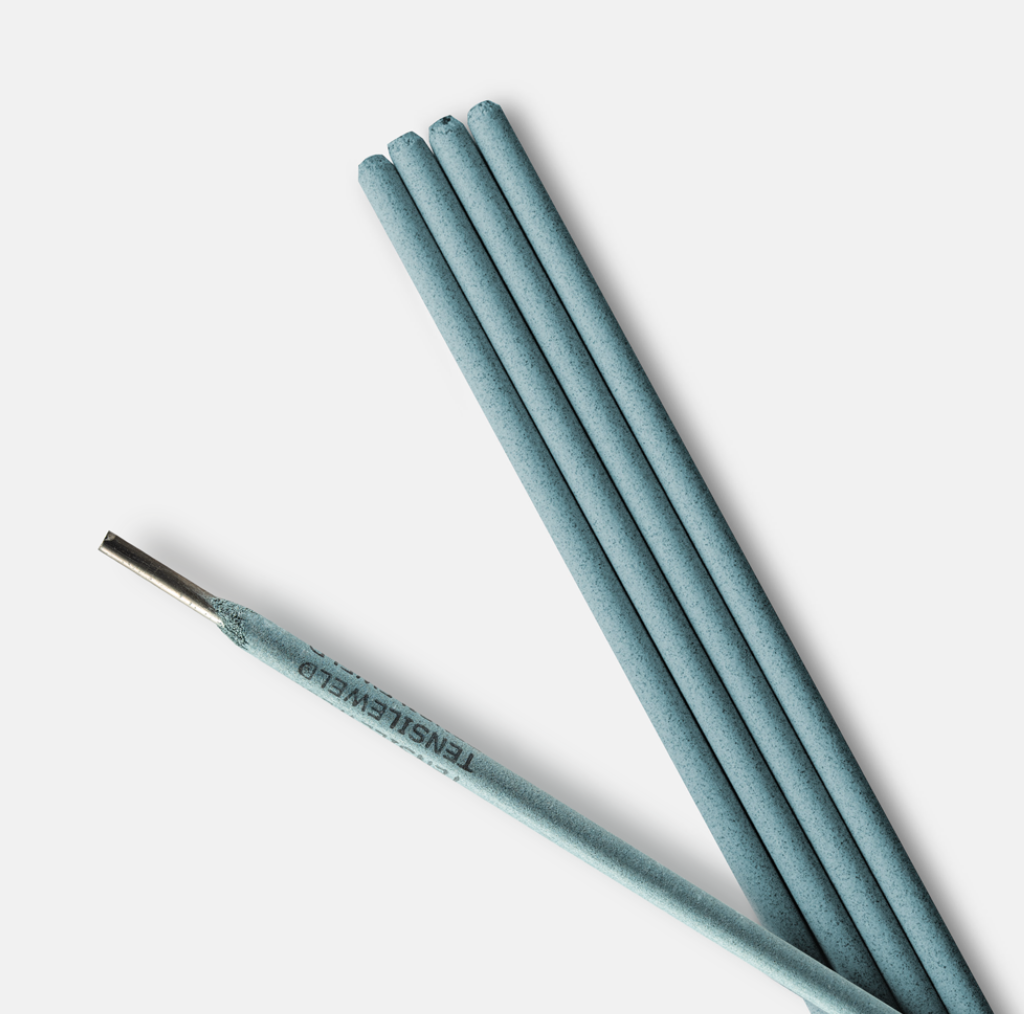
  • Washington Alloy 7014 Stick Electrode – Smooth Welding with High Deposition

    Washington Alloy 7014 Stick Electrode – Smooth Welding with High Deposition


    Note for Readers: This post may contain affiliate links. If you purchase through them, we may earn a small commission at no cost to you. Thank you for supporting our site.


    Introduction

    The Washington Alloy 7014 Stick Electrode is a high-deposition, iron powder-coated rod designed for shielded metal arc welding (SMAW). Known for its smooth arc, minimal spatter, and excellent bead appearance, E7014 is widely used in structural and general fabrication.

    This electrode conforms to AWS A5.1: E7014 specifications, with a tensile strength rating of 70,000 psi, making it suitable for a wide range of light-to-heavy fabrication tasks. Its ease of use makes it popular with both professionals and welding students.

    Who uses 7014 most often?

    • Industrial repair welders working on structural steel and machinery

    • Fabricators handling mid-strength steel components

    • Apprentices & students learning flat and horizontal techniques

    • Maintenance teams in construction and manufacturing


    Types / Variants / Sizes

    Washington Alloy 7014 electrodes are available in common diameters to match different amperages and material thicknesses:

    • 3/32” (2.4 mm) – For thin materials and light fabrication

    • 1/8” (3.2 mm) – Most popular all-around size for shop and field work

    • 5/32” (4.0 mm) – Higher deposition for heavier applications like machinery or frames

    • 3/16” (4.8 mm) – Used where large amounts of weld metal are needed quickly

    Each size has specific amperage ranges, which should be followed for best arc stability and bead quality.


    Key Features and Specifications

    • AWS Classification: E7014 — 70,000 psi tensile strength

    • Polarity: Runs on AC, DCEN, or DCEP — compatible with virtually all stick welders

    • Iron Powder Coating: Boosts deposition rate, producing wide, flat beads

    • Welding Positions: Flat and horizontal fillet (not suited for vertical or overhead)

    • Coating Type: Titania iron powder — improves arc stability, slag release, and reduces spatter

    • Typical Amperage Ranges:

      • 3/32” → 90–130 amps

      • 1/8” → 110–165 amps

      • 5/32” → 150–210 amps

    Certifications

    • Meets AWS A5.1 E7014 classification

    • Often accepted under ANSI/ASME code for mild steel work (check project specs for critical joints)

    • CE-rated for consistency in international markets


    Usage & Compatibility

    The Washington Alloy 7014 is designed for SMAW stick welding and requires no external shielding gas.

    Compatible With:

    • AC or DC welding machines (transformer or inverter)

    • Standard electrode holders

    • Work on clean to lightly rusted or scaled mild steel surfaces

    Pros:

    • Smooth, stable arc with easy restarts

    • Slag peels off cleanly

    • High deposition efficiency saves time on larger welds

    Cons:

    • Limited to flat and horizontal positions

    • Moderate penetration — heavy sections require beveling and multiple passes


    Common Applications

    Because of its smooth bead appearance and high deposition rate, Washington Alloy 7014 is a go-to rod for:

    • Structural fabrication – beams, plates, frames, and trusses

    • General shop welding – trailers, tanks, brackets, and equipment

    • Maintenance & repair – farm implements, machinery, and worn steel components

    • Construction & field welding – non-critical reinforcement and patch jobs

    7014 excels where appearance, speed, and ease of use matter more than deep penetration.


    Tips & Best Practices

    Setup:

    • Polarity: AC or DC (DCEP recommended for better penetration)

    • Storage: Keep rods dry; if moisture is absorbed, recondition at ~300°F for 1 hour

    • Prep: Remove oil/grease; light rust or scale is acceptable

    Technique:

    • Drag or use a light weave in fillet welds

    • Maintain a short arc length for best stability and low spatter

    • Use slightly higher amps than 6013 for proper bead wetting

    Troubleshooting:

    • Porosity or wormholes → check for contamination or long arc length

    • Slag inclusions → adjust travel angle and maintain consistent speed

    • Rod sticking → raise amperage slightly or reduce arc force setting (on inverters)


    Conclusion

    The Washington Alloy 7014 Stick Electrode is a reliable, user-friendly rod for flat and horizontal mild steel welding. With its iron powder coating, smooth bead profile, and easy slag removal, it’s an excellent choice for welders who want high deposition rates without sacrificing appearance.

    Best suited for structural steel, farm repairs, shop projects, and training programs, Washington Alloy 7014 is a staple electrode that combines productivity with ease of use.

    No products found.


    Check current price, size availability, and reviews on Amazon.

    The Washington Alloy 7014 Stick Electrode is a high-deposition, iron powder-coated welding rod designed for shielded metal arc welding (SMAW) applications. This electrode is particularly known for delivering strong, clean welds with minimal spatter and excellent arc stability. It conforms to AWS A5.1/A5.1M: E7014 standards, making it a trusted selection across a range of light and heavy fabrication jobs.

    This type of electrode is used extensively by:

    • Professional welders for industrial repair work and structural steel projects
    • Metal fabricators handling mid-range strength steel components
    • Welding students and apprentices are learning flat and horizontal welding techniques
    • Engineers and maintenance personnel in manufacturing and construction settings

    Washington Alloy’s 7014 offers ease-of-use and versatility that make it ideal for both field and shop welding environments.


    Types / Variants / Models

    Washington Alloy 7014 is principally consistent in terms of core composition, but it is available in a variety of diameter sizes, each intended for different welding requirements and amperage ranges. These variations allow welders to tailor their tool selection for the thickness and position of the workpiece.

    Common Size Variants:

    • 3/32” (2.4 mm) – For light fabrication, sheet metal, and thinner materials
    • 1/8” (3.2 mm) – A general-purpose size for structural steels and machine parts
    • 5/32” (4.0 mm) – High-deposition use in heavy-duty applications like tractor parts, steel frames
    • 3/16” (4.8 mm) – For highly demanding builds requiring deeper penetration and heavier welds

    Each size has specific amperage recommendations, which must be observed to ensure arc stability and bead quality.


    Key Features or Specifications

    Here’s a technical breakdown of the most essential specifications that define the performance of the Washington Alloy 7014 Stick Electrode:

    • AWS Classification: E7014 – indicates a tensile strength of 70,000 psi, suitable for structural steel applications
    • Polarity: AC, DCEN or DCEP – Compatible with all current types, adding flexibility for different welding machines
    • Iron Powder Content: High – Enhances deposition rate and results in a smooth, flat bead appearance
    • Welding Positions: 1G, 2F (Flat & Horizontal only) – Not designed for vertical or overhead welding
    • Coating Type: Titania Iron Powder – Improves slag control, arc stability, and minimal spatter
    • Amperage Range:
      • 3/32”: 90–130 amps
      • 1/8”: 110–165 amps
      • 5/32”: 150–210 amps
    • Certifications:
      • AWS A5.1 E7014
      • Meets relevant ANSI and ASME code standards for structural and maintenance welding
      • CE-rated for product consistency in international applications

    These technical specifications translate into tangible real-world benefits—faster travel speed, smoother beads, and less cleanup.


    Usage & Compatibility

    The Washington Alloy 7014 Stick Electrode is specifically optimized for Shielded Metal Arc Welding (SMAW). Unlike electrodes used in GMAW (MIG) or GTAW (TIG), E7014 does not require shielding gas, relying instead on its flux coating.

    Compatible Equipment:

    • AC or DC stick welding machines
    • Transformer or inverter-type welding power sources
    • Electrode holders suitable for high-duty cycle operations

    Pros:

    • Easy slag removal
    • Clean arc start and restart
    • Suitable for rusty or mill-scaled steel surfaces

    Cons:

    • Not suitable for vertical or overhead welds
    • Moderate penetration – not ideal for thick cross-sections without beveling

    Welders appreciate its low learning curve, making it a popular electrode for vocational programs and field repair work alike.


    Common Applications

    Washington Alloy 7014 excels in mild steel welding projects and finds frequent use in sectors where time efficiency and bead appearance are crucial:

    • Structural steelwork – Beams, trusses, plates
    • General fabrication – Tanks, trailers, farm implements
    • Maintenance & repair – Machinery rebuilds, worn parts build-up
    • Light manufacturing – Auto body, brackets, frames
    • Construction equipment – Reinforcements and patching in non-critical areas

    Its high-rate deposition efficiency makes it ideal for large weldments that benefit from faster welding speeds with less downtime for rod changes or slag clearing.


    Tips & Best Practices

    Here’s how to get the best performance when working with Washington Alloy 7014:

    Setup:

    • Polarity: AC or DC (electrode positive recommended for deeper penetration)
    • Dry Electrode Storage: Keep rods dry; if exposed to moisture, recondition at 300°F for 1 hour
    • Workpiece Prep: Clean off oil/grease; light rust is acceptable due to the electrode’s forgiving nature

    Usage Tips:

    • Use a drag or light weave technique on flat or fillet welds
    • Maintain short arc length to reduce spatter and ensure arc stability
    • Use slightly higher amperage compared to E6013 for optimal melt characteristics

    Troubleshooting:

    • Porosity or worm tracking? Check for contamination or excessive arc length
    • Slag inclusion? Adjust travel angle and maintain uniform speed
    • Rod sticking? Lower arc force setting (if using an inverter), or up amperage slightly for thick sections

    Conclusion

    The Washington Alloy 7014 Stick Electrode is a solid performer in flat and horizontal stick welding applications—offering high deposition rates, excellent bead aesthetics, and user-friendly handling. Its compatibility with AC and DC currents and its ability to work over rusty or scaled surfaces without gas shielding make it a valuable tool in any welder’s inventory.

    This electrode is ideal for fabricators, welders-in-training, maintenance crews, and small-shop professionals needing an efficient, reliable rod for mild steel work.


    Washington Alloy 7014 Stick Electrode 5LB Package (7014 3/32″)
    • All-position, Flux coated
    • 70,000 lbs Tensile Strength
    • 5 Lb Package
    • AC or DC (straight or reverse polarity) may be used

    Last update on 2026-03-27 / Affiliate links / Images from Amazon Product Advertising API


    Washington Alloy 7014 Stick Electrode 5LB Package (7014 1/8″)
    • All-position, Flux coated
    • 70,000 lbs Tensile Strength
    • 5 Lb Package
    • AC or DC (straight or reverse polarity) may be used

    Last update on 2026-03-27 / Affiliate links / Images from Amazon Product Advertising API

    Washington Alloy 7014 Stick Electrode 5LB Package (7014 5/32″)
    • All-position, Flux coated
    • 70,000 lbs Tensile Strength
    • 5 Lb Package
    • AC or DC (straight or reverse polarity) may be used

    Last update on 2026-03-27 / Affiliate links / Images from Amazon Product Advertising API

Try Amazon Prime Free