Tag: grinder accessories

  • 75/100mm M14 Steel Wire Cup Brush for Angle Grinder: When M14 Makes Sense (and When It Doesn’t)

    Category: Surface Prep/Cleaning
    Cluster: Surface Prep & Cleaning (wire wheels, flap discs, rust/paint removal)

    A wire cup brush is a fast way to strip rust, paint, and scale—but only if it actually fits your grinder. One of the most common “wrong order” problems is thread mismatch: M14 (common on many non-U.S. grinders) vs 5/8″-11 (common on many U.S. grinders).

    This post breaks down what a 75/100mm M14 steel wire cup brush is used for in welding prep, how to confirm fitment, and what to compare before you buy.

    75/100mm M14 Steel Wire Cup Brush Powerful Paint Removal Rotary Tool Twisted Steel Wire Wheel Abrasive for Angle Grinder Debu(A1)
    • Wire Scratch Brushes
    • 75/100mm M14 Steel Wire Cup Brush Powerful Paint Removal Rotary Tool Twisted Steel Wire Wheel Abrasive For Angle Grinder Debu

    Last update on 2026-03-27 / Affiliate links / Images from Amazon Product Advertising API

    Performance & use (what it’s for)

    A 75 mm (about 3″) or 100 mm (about 4″) wire cup brush is typically used for:

    • Removing surface rust and paint before welding or repainting
    • Cleaning weld zones prior to rework (especially around spatter and oxidation)
    • Fast cleanup on plate, angle, and channel where sanding is slow
    • General surface conditioning when you don’t want to remove much base metal

    Size choice (rule of thumb):

    • 75 mm (3″): better control and access in tighter areas
    • 100 mm (4″): faster coverage on open surfaces

    What to compare before you buy

    • Thread standard (M14 vs 5/8″-11): confirm your grinder spindle thread before ordering.
    • Brush diameter: choose 75 mm (3″) for control or 100 mm (4″) for speed, based on clearance and access.
    • Wire style: knotted wire is more aggressive; crimped is less aggressive and often smoother.
    • Max RPM rating: match to your grinder’s no-load RPM (do not exceed).
    • Guard and handling: confirm you can run the brush with appropriate guarding and stable two-hand control.

    Comparable Amazon picks (optional)

    M14 vs 5/8″-11: the fitment problem that wastes time

    If you’re in the U.S., a lot of angle grinders use 5/8″-11. Many grinders outside the U.S. (and some imported models) use M14. The brushes are not interchangeable without the correct spindle/adapter—and adapters can introduce runout or safety issues if they’re not designed for the tool and RPM.

    Best practice: buy the brush that matches your grinder spindle thread. If you’re unsure, check:

    • The grinder manual/spec plate
    • The spindle nut/accessory thread spec
    • The OEM accessory recommendations for your grinder model

    Where this brush fits in a welding workflow

    Use a wire cup brush early in the process:

    1. Strip paint/rust/scale back from the weld zone
    2. Degrease if needed (wire brushing doesn’t remove oil)
    3. Fit-up and tack
    4. After welding, brush to remove surface oxidation or prep for paint (as appropriate)

    If you’re cleaning stainless or critical surfaces, be careful about cross-contamination (dedicated brushes for dedicated materials).

    Safety notes (do not skip)

    Wire cups can shed wire and throw debris at high speed.

    • Safety glasses plus a face shield
    • Gloves and long sleeves
    • Keep the brush moving—don’t dig in and stall it
    • Don’t exceed rated RPM
    • Replace the brush if it’s out of balance, missing wire bundles, or damaged

    Bottom line

    The main reason to buy an M14 wire cup brush is simple: your grinder is M14. Confirm the thread standard first, then pick the diameter (75 mm vs 100 mm) based on access and coverage, and match the brush’s RPM rating to your tool.
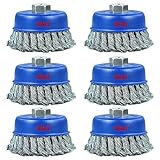

  • SALI 6 Pack Wire Cup Brush (4″) for Angle Grinder: What It’s Good For and What to Check

    Category: Surface Prep/Cleaning
    Cluster: Surface Prep & Cleaning (wire wheels, flap discs, rust/paint removal)

    If you do any amount of weld cleanup, mill scale removal, or paint/rust stripping, a knotted wire cup brush is one of the fastest ways to get back to clean metal. The catch is that wire cups can be a bad fit (wrong arbor), run rough, or shed wire if you push them past what they’re built for.

    This guide covers what the SALI 6 Pack Wire Cup Brush (4″) is, where it makes sense in a welding workflow, and what to compare before you buy so you don’t end up with a brush that doesn’t fit your grinder or doesn’t match the job.

    SALI 6 Pack Wire Cup Brush, 4 Inch Twisted Knotted Cup Brush for Grinders, with 5/8-11 Inch Arbor for Heavy Cleaning Rust, Stripping and Abrasive, for Angle Grinder
    • [SAFETY] Equipped with an internal fixing plate to avoid flying wire breakage during use and ensure consistency.
    • [High Quality Carbon Steel Wire] Reliable, long life, safe, smooth and easy to use.
    • [Excellent Design] Innovative spiral knotting and crimping brush structure, thick knot cup design is perfect for heavy-duty polished surface finishes, crimping design provides maximum flexibility and fatigue resistance.
    • [Wide Range of Uses] High speed and easy to use is ideal for removing rust, corrosion and paint. cleaning metal surfaces, also works well to remove rust, paint and corrosion.
    • Before proceeding, please wear the necessary protective clothing as well as install the wire cup brush to the correct angle grinder.

    Last update on 2026-03-27 / Affiliate links / Images from Amazon Product Advertising API

    Performance & use (what it’s for)

    A 4-inch twisted/knotted wire cup brush is typically used for:

    • Removing light-to-moderate rust and paint from steel
    • Cleaning weld areas before rework (especially around spatter and surface contamination)
    • Stripping coatings on brackets, frames, and plate before welding
    • Fast cleanup on structural shapes where a flap disc would be slower

    Where it’s not the right tool: precision blending, finish work, or anything where you need controlled material removal. For that, flap discs or grinding wheels are usually the better choice.

    What to compare before you buy

    • Arbor/thread size: confirm your grinder spindle matches the brush’s thread (common is 5/8″-11 in the U.S.).
    • Brush diameter vs guard clearance: confirm the cup clears your guard and doesn’t contact it under load.
    • Wire type and aggressiveness: knotted wire is more aggressive than crimped; choose based on how much material you can safely remove.
    • Max RPM rating: match the brush rating to your grinder’s no-load RPM (do not exceed).
    • Workpiece risk: wire cups can throw wire and debris—plan PPE and shielding accordingly.

    Comparable Amazon picks (optional)

    When a wire cup brush beats a flap disc (and when it doesn’t)

    Use a wire cup brush when you need speed and you’re removing surface contamination (rust/paint/scale) more than shaping metal. It’s also useful when you want to avoid gouging edges the way a hard wheel can.

    Use a flap disc when you need:

    • Controlled blending on weld toes
    • Smoother finish before paint
    • Predictable material removal on edges and corners

    Fitment checklist (quick)

    Before you click “buy,” confirm:

    • Your grinder spindle thread (commonly 5/8″-11 in the U.S.; verify your model)
    • Your guard size and whether it can stay installed during use
    • Your grinder’s max RPM
    • The surfaces you’ll hit most (flat plate vs corners vs inside angles)

    Safety notes (wire wheels are not forgiving)

    Wire cup brushes can throw wire and launch debris. Treat them like a cutting/grinding operation:

    • Wear safety glasses plus a face shield
    • Gloves and long sleeves help with wire “needle” injuries
    • Keep bystanders clear and avoid brushing toward your body
    • Don’t exceed rated RPM and don’t use a damaged brush

    Bottom line

    If you want a multi-pack of 4″ knotted wire cup brushes for routine weld prep and cleanup, this SALI set is the right category of tool—just make sure the arbor/thread and RPM rating match your grinder, and use the right PPE every time.

Watch with Prime Video