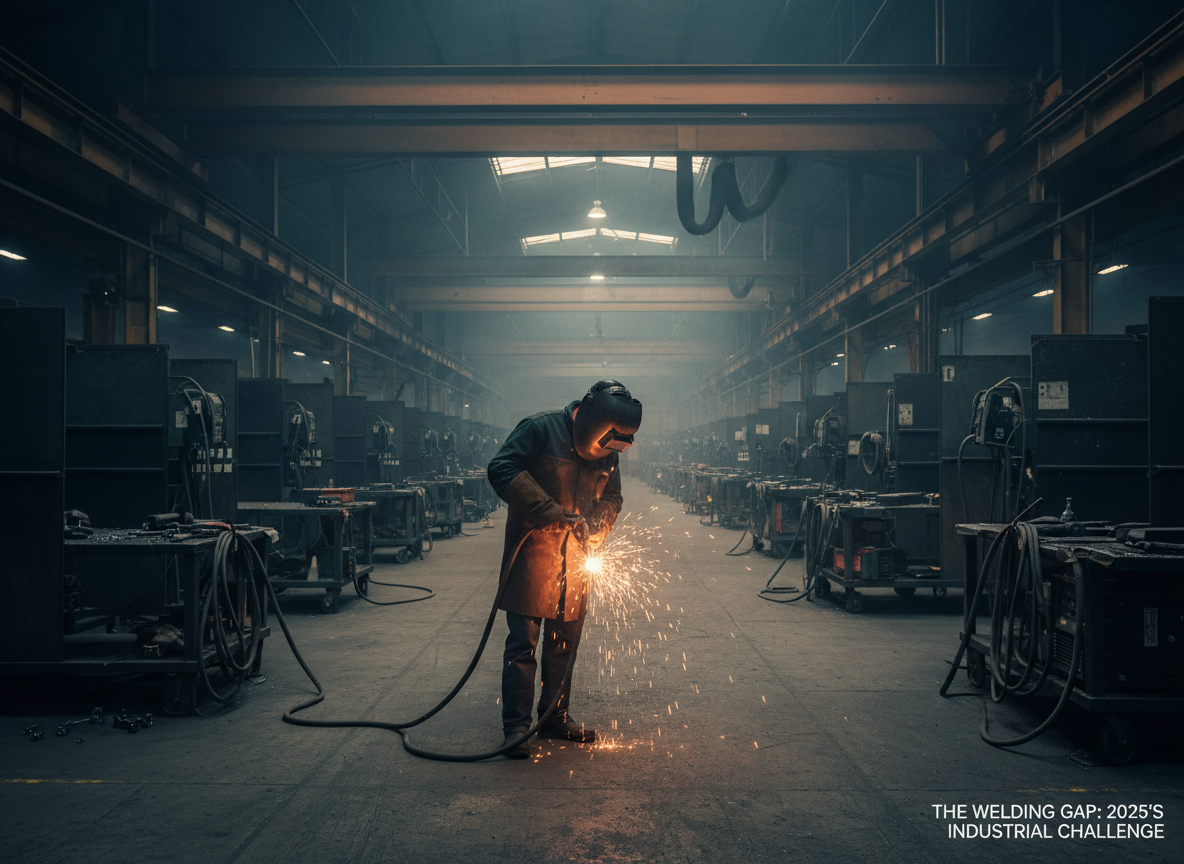
The U.S. welding industry is entering a pressure zone: a massive labor shortage, an aging skilled workforce, and demand that keeps climbing. AWS projects a 400,000-welder shortage in 2025, and the average welder is now 55 years old—far older than the general workforce. Retirements are hitting faster than replacements can be trained, and shops are already feeling the squeeze.
This post breaks down the shortage, what it means for wages and job security, and how shops are adapting.
Key Takeaways
- The U.S. welding trade faces a 400K worker shortage in 2025 (AWS).
- Average welder age: ~55, vs. 42 for the general workforce.
- Skilled welders are commanding premium rates, OT, and retention bonuses.
- Shops are increasing training, embracing automation, and shifting workflows.
- Buyers should expect labor-driven pricing pressure on fabricated products.
The Numbers: A Shortage Years in the Making
The American Welding Society has been warning about this for a decade, but the timeline is now real:
- 400,000+ welders needed by 2025 to meet U.S. demand (AWS).
- 61% of welding professionals are now over age 45.
- Trade schools report enrollment backlogs for welding programs.
- Large segments of the pipeline (especially structural and pipe welders) are aging out simultaneously.
Why it matters:
Shops are running leaner crews, projects are delayed, and labor costs are rising across the board.
What This Means for Welders (Spoiler: Job Security)
If you’re a welder—or training to become one—this is one of the strongest job markets in the trade’s history.
Expect:
- Higher hourly wages
- More job options
- More overtime
- Better benefits and sign-on bonuses
- Employers willing to invest in upskilling & certifications
A young welder entering the industry in 2025 has a near-guaranteed job path for the next decade.
What This Means for Shops & Buyers
Shops are already adjusting operations:
1. Automation Where It Makes Sense
Not full replacement—augmentation.
Robotic cells, positioners, and fixturing tables are helping smaller crews produce more.
Internal resource: Check out our guide to fixture tables and clamps for improving throughput.
2. In-House Training Pipelines
Shops are partnering with schools, offering apprenticeships, or training helpers into full welders.
3. Higher Labor Costs
Credentials (AWS D1.1, pipe certs, aluminum, stainless TIG) now carry premium value.
Buyers should expect tighter project timelines and pricing pressure driven by labor scarcity.
4. Retention Strategies
- Tool stipends
- Boot allowances
- Consistent scheduling
- Safer environments and updated PPE
How Shops Can Stay Competitive in 2025
Invest in Skill
Retaining one high-skill welder is cheaper than retraining three inexperienced hires.
Leverage Positioning & Fixturing
Strong Hand–style modular tooling can cut setup time dramatically, making fewer hands more productive.
Upgrade PPE and Comfort Gear
A safer, more comfortable welder is a more consistent welder.
(Internal link: MIG gloves, TIG gloves, helmet guides.)
Cross-Train Where Practical
Training helpers to tack, grind, and prep work reduces the load on certified welders.
Safety Notes
- Follow ANSI Z87.1 for all welding helmets/eye protection.
- Use proper ventilation when welding stainless, galvanized, or aluminum.
- For automation or mechanized welding, review the manufacturer’s electrical grounding and guarding requirements.
- Always cross-check equipment specs with OEM manuals.
FAQ
Is the welder shortage really 400,000 in 2025?
Yes—AWS projections place the gap at 360–400K workers due to retirements, expanding infrastructure projects, and low trade school enrollment.
Will robots replace welders?
No. Automation supplements welding, but human welders remain vital for complex, variable, and out-of-position work.
Are wages going up?
In most regions, yes—especially for pipe, structural, and TIG welders with current certs.
What can shops do to attract welders?
Better tools, consistent hours, PPE allowances, clean shops, and clear advancement paths.
Sources Checked
- American Welding Society (AWS) labor reports
- Bureau of Labor Statistics (BLS) welder demographics
- Manufacturer data sheets (Strong Hand Tools)
- Industry training program enrollment reports (2023–2025)