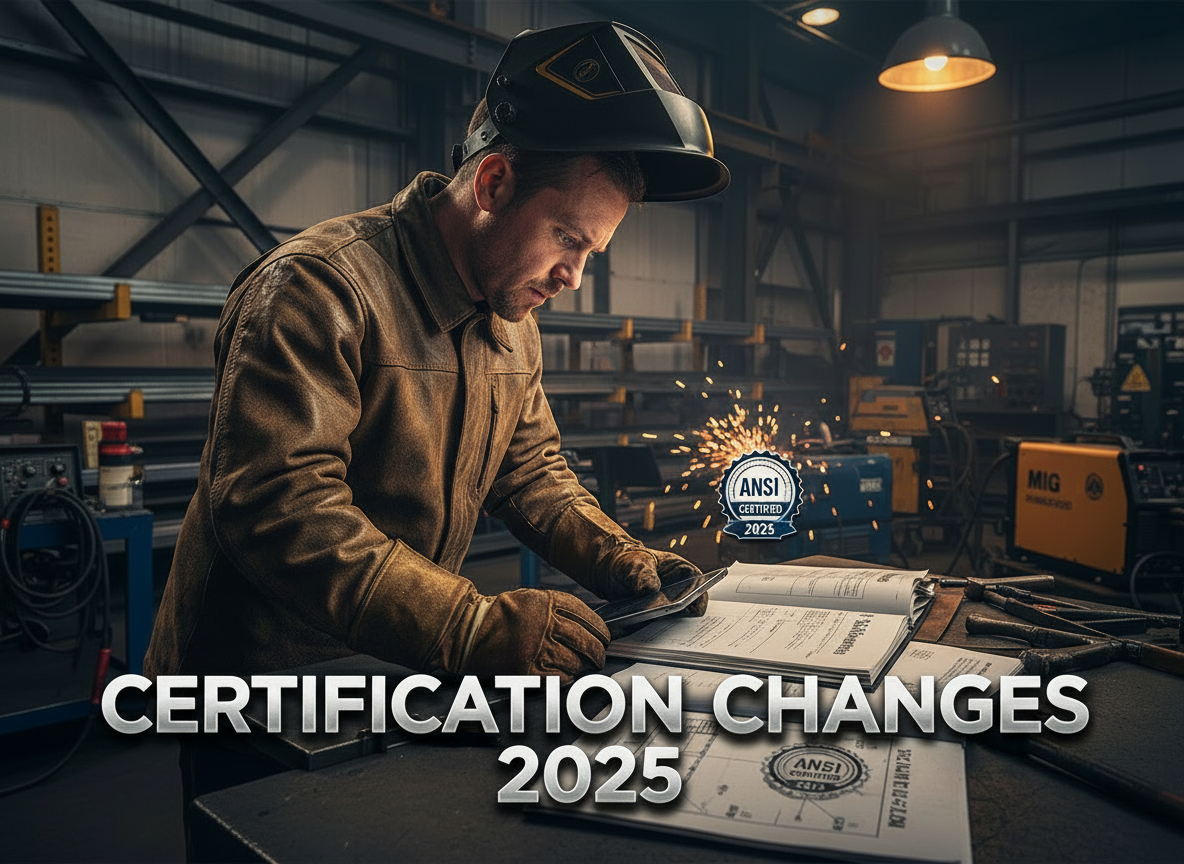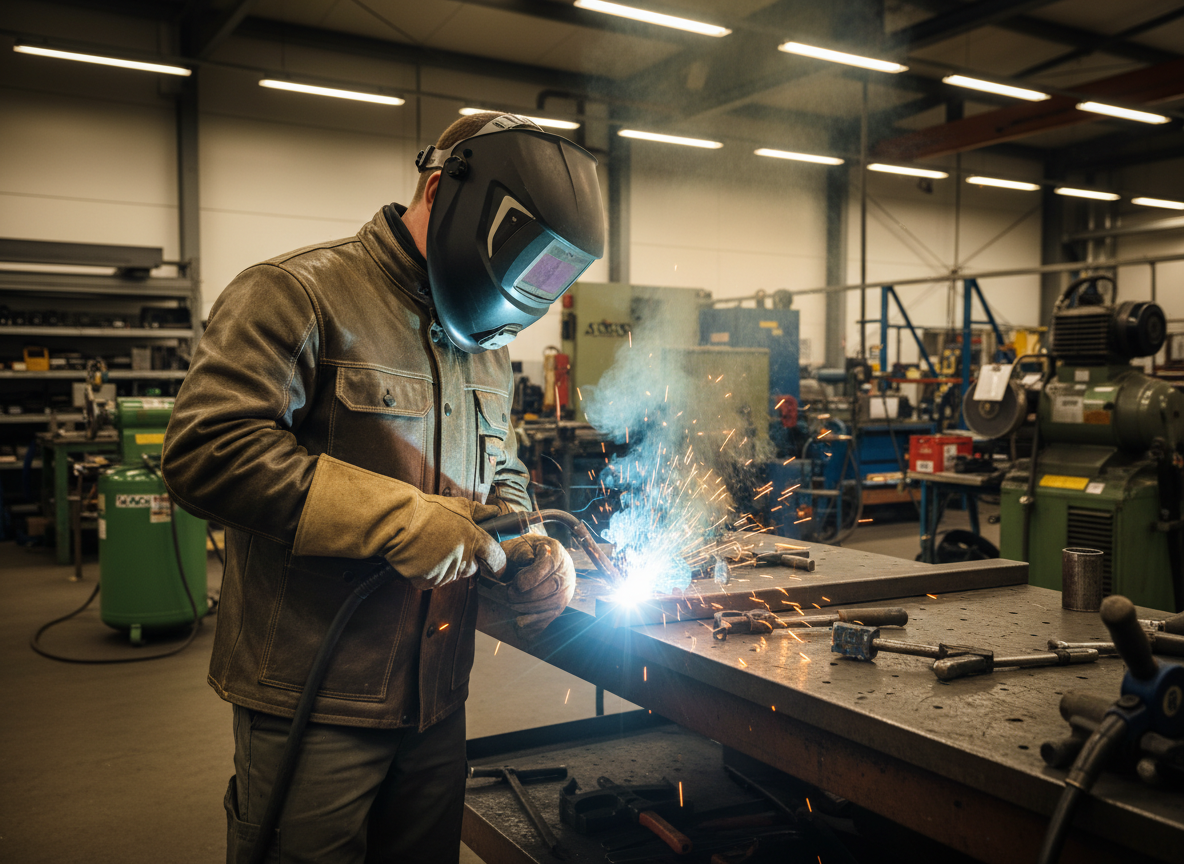
Welding fumes have always carried health risks, but 2025 brings a major shift in how OSHA, AWS, and safety professionals are treating long-term exposure. Injury rates in welding have dropped 15% since 2020, but chronic inflammation, respiratory diseases, and cumulative metal-fume toxicity are getting significantly more attention.
What’s driving the change?
Stricter exposure limits, new PPE technologies, and better data on how manganese, hexavalent chromium, nickel, and aluminum fumes impact long-term health.
This guide explains what’s new, what’s trending, and which respirators provide real protection—not just marketing.
Key Takeaways
- Chronic inflammation from long-term fume exposure is a major 2025 focus
- OSHA and ANSI Z49.1 have updated guidance for ventilation and fume extraction
- PAPRs and tight-fitting respirators are becoming standard, not optional
- Shops must document airflow, PPE compliance, and exposure reduction
- Welders need gear that protects against manganese, aluminum oxides, and stainless fumes
What Changed in 2025
1. Chronic Inflammation Identified as a High-Priority Health Risk
Research now links long-term fume exposure to:
- Chronic lung inflammation
- Reduced lung function
- Cardiovascular stress
- Increased sensitivity to airborne metals
OSHA has signaled more aggressive enforcement on fume control, especially in enclosed fabrication environments.
2. Stronger Requirements for Fume Extraction & Ventilation
ANSI Z49.1 (Safety in Welding, Cutting, and Allied Processes) now emphasizes:
- Mandatory local exhaust ventilation in most shop environments
- Airflow documentation for enclosed welding stations
- Regular fume monitoring for stainless, galvanized, and hardfacing work
Shops that relied on “general ventilation” are being pushed toward mechanical extraction.
3. PPE Expectations Increased Across Industries
Old disposable masks don’t cut it anymore. For metal fume exposure, the standard is shifting toward:
- Elastomeric half-mask respirators with P100 filters
- PAPRs for long-duration welding or stainless applications
- Integrated hood systems for high-particulate shops
Shops are required to treat fume protection as “essential PPE,” not optional.
Where Welders Are Most at Risk
The highest fume loads appear in:
• MIG welding in confined areas
High particulate, high manganese content.
• Stainless steel welding (GMAW, GTAW, FCAW)
Hexavalent chromium risk.
• Hardfacing and high-heat processes
High metal concentration and oxide generation.
• Multi-pass structural welding
Sustained exposure on thick materials increases cumulative load.
Recommended PPE for Real Protection (Not Marketing Claims)
Below are two Miller respirators your audience already trusts and you want to sell. These are ideal for 2025’s stricter fume-control expectations.
Miller LPR-100 (295273 / 295274)
A low-profile, P100-rated respirator designed specifically for welding hoods.
Why it stands out:
- Tight-seal fit designed for welding helmets
- Filters block 99.97% of airborne particulates
- Compact design prevents interference with PAPR hoses or helmets
- Great for MIG, Stick, and TIG operations
- Lower breathing resistance than many elastomeric masks
Where to Buy
ArcWeld Store: $59.72 In Stock

Miller 295273 LPR-100 Gen. II Half Mask Respirator with Nuisance OV Relief, S/M Size