Tag: angle grinder

  • 75/100mm M14 Steel Wire Cup Brush for Angle Grinder: When M14 Makes Sense (and When It Doesn’t)

    Category: Surface Prep/Cleaning
    Cluster: Surface Prep & Cleaning (wire wheels, flap discs, rust/paint removal)

    A wire cup brush is a fast way to strip rust, paint, and scale—but only if it actually fits your grinder. One of the most common “wrong order” problems is thread mismatch: M14 (common on many non-U.S. grinders) vs 5/8″-11 (common on many U.S. grinders).

    This post breaks down what a 75/100mm M14 steel wire cup brush is used for in welding prep, how to confirm fitment, and what to compare before you buy.

    75/100mm M14 Steel Wire Cup Brush Powerful Paint Removal Rotary Tool Twisted Steel Wire Wheel Abrasive for Angle Grinder Debu(A1)
    • Wire Scratch Brushes
    • 75/100mm M14 Steel Wire Cup Brush Powerful Paint Removal Rotary Tool Twisted Steel Wire Wheel Abrasive For Angle Grinder Debu

    Last update on 2026-03-27 / Affiliate links / Images from Amazon Product Advertising API

    Performance & use (what it’s for)

    A 75 mm (about 3″) or 100 mm (about 4″) wire cup brush is typically used for:

    • Removing surface rust and paint before welding or repainting
    • Cleaning weld zones prior to rework (especially around spatter and oxidation)
    • Fast cleanup on plate, angle, and channel where sanding is slow
    • General surface conditioning when you don’t want to remove much base metal

    Size choice (rule of thumb):

    • 75 mm (3″): better control and access in tighter areas
    • 100 mm (4″): faster coverage on open surfaces

    What to compare before you buy

    • Thread standard (M14 vs 5/8″-11): confirm your grinder spindle thread before ordering.
    • Brush diameter: choose 75 mm (3″) for control or 100 mm (4″) for speed, based on clearance and access.
    • Wire style: knotted wire is more aggressive; crimped is less aggressive and often smoother.
    • Max RPM rating: match to your grinder’s no-load RPM (do not exceed).
    • Guard and handling: confirm you can run the brush with appropriate guarding and stable two-hand control.

    Comparable Amazon picks (optional)

    M14 vs 5/8″-11: the fitment problem that wastes time

    If you’re in the U.S., a lot of angle grinders use 5/8″-11. Many grinders outside the U.S. (and some imported models) use M14. The brushes are not interchangeable without the correct spindle/adapter—and adapters can introduce runout or safety issues if they’re not designed for the tool and RPM.

    Best practice: buy the brush that matches your grinder spindle thread. If you’re unsure, check:

    • The grinder manual/spec plate
    • The spindle nut/accessory thread spec
    • The OEM accessory recommendations for your grinder model

    Where this brush fits in a welding workflow

    Use a wire cup brush early in the process:

    1. Strip paint/rust/scale back from the weld zone
    2. Degrease if needed (wire brushing doesn’t remove oil)
    3. Fit-up and tack
    4. After welding, brush to remove surface oxidation or prep for paint (as appropriate)

    If you’re cleaning stainless or critical surfaces, be careful about cross-contamination (dedicated brushes for dedicated materials).

    Safety notes (do not skip)

    Wire cups can shed wire and throw debris at high speed.

    • Safety glasses plus a face shield
    • Gloves and long sleeves
    • Keep the brush moving—don’t dig in and stall it
    • Don’t exceed rated RPM
    • Replace the brush if it’s out of balance, missing wire bundles, or damaged

    Bottom line

    The main reason to buy an M14 wire cup brush is simple: your grinder is M14. Confirm the thread standard first, then pick the diameter (75 mm vs 100 mm) based on access and coverage, and match the brush’s RPM rating to your tool.

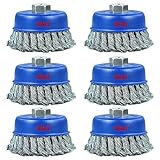
  • SALI 6 Pack Wire Cup Brush (4″) for Angle Grinder: What It’s Good For and What to Check

    Category: Surface Prep/Cleaning
    Cluster: Surface Prep & Cleaning (wire wheels, flap discs, rust/paint removal)

    If you do any amount of weld cleanup, mill scale removal, or paint/rust stripping, a knotted wire cup brush is one of the fastest ways to get back to clean metal. The catch is that wire cups can be a bad fit (wrong arbor), run rough, or shed wire if you push them past what they’re built for.

    This guide covers what the SALI 6 Pack Wire Cup Brush (4″) is, where it makes sense in a welding workflow, and what to compare before you buy so you don’t end up with a brush that doesn’t fit your grinder or doesn’t match the job.

    SALI 6 Pack Wire Cup Brush, 4 Inch Twisted Knotted Cup Brush for Grinders, with 5/8-11 Inch Arbor for Heavy Cleaning Rust, Stripping and Abrasive, for Angle Grinder
    • [SAFETY] Equipped with an internal fixing plate to avoid flying wire breakage during use and ensure consistency.
    • [High Quality Carbon Steel Wire] Reliable, long life, safe, smooth and easy to use.
    • [Excellent Design] Innovative spiral knotting and crimping brush structure, thick knot cup design is perfect for heavy-duty polished surface finishes, crimping design provides maximum flexibility and fatigue resistance.
    • [Wide Range of Uses] High speed and easy to use is ideal for removing rust, corrosion and paint. cleaning metal surfaces, also works well to remove rust, paint and corrosion.
    • Before proceeding, please wear the necessary protective clothing as well as install the wire cup brush to the correct angle grinder.

    Last update on 2026-03-27 / Affiliate links / Images from Amazon Product Advertising API

    Performance & use (what it’s for)

    A 4-inch twisted/knotted wire cup brush is typically used for:

    • Removing light-to-moderate rust and paint from steel
    • Cleaning weld areas before rework (especially around spatter and surface contamination)
    • Stripping coatings on brackets, frames, and plate before welding
    • Fast cleanup on structural shapes where a flap disc would be slower

    Where it’s not the right tool: precision blending, finish work, or anything where you need controlled material removal. For that, flap discs or grinding wheels are usually the better choice.

    What to compare before you buy

    • Arbor/thread size: confirm your grinder spindle matches the brush’s thread (common is 5/8″-11 in the U.S.).
    • Brush diameter vs guard clearance: confirm the cup clears your guard and doesn’t contact it under load.
    • Wire type and aggressiveness: knotted wire is more aggressive than crimped; choose based on how much material you can safely remove.
    • Max RPM rating: match the brush rating to your grinder’s no-load RPM (do not exceed).
    • Workpiece risk: wire cups can throw wire and debris—plan PPE and shielding accordingly.

    Comparable Amazon picks (optional)

    When a wire cup brush beats a flap disc (and when it doesn’t)

    Use a wire cup brush when you need speed and you’re removing surface contamination (rust/paint/scale) more than shaping metal. It’s also useful when you want to avoid gouging edges the way a hard wheel can.

    Use a flap disc when you need:

    • Controlled blending on weld toes
    • Smoother finish before paint
    • Predictable material removal on edges and corners

    Fitment checklist (quick)

    Before you click “buy,” confirm:

    • Your grinder spindle thread (commonly 5/8″-11 in the U.S.; verify your model)
    • Your guard size and whether it can stay installed during use
    • Your grinder’s max RPM
    • The surfaces you’ll hit most (flat plate vs corners vs inside angles)

    Safety notes (wire wheels are not forgiving)

    Wire cup brushes can throw wire and launch debris. Treat them like a cutting/grinding operation:

    • Wear safety glasses plus a face shield
    • Gloves and long sleeves help with wire “needle” injuries
    • Keep bystanders clear and avoid brushing toward your body
    • Don’t exceed rated RPM and don’t use a damaged brush

    Bottom line

    If you want a multi-pack of 4″ knotted wire cup brushes for routine weld prep and cleanup, this SALI set is the right category of tool—just make sure the arbor/thread and RPM rating match your grinder, and use the right PPE every time.

  • Mill Scale on Hot-Rolled Steel: Why It Ruins Welds (And How to Remove It in 5 Minutes)

    Mill scale is the dark, brittle oxide coating on hot-rolled steel straight from the mill. It looks harmless but traps moisture and contaminants that cause porosity, weak bonds, and visible defects in your weld. Remove it before striking an arc—it takes 5 minutes and prevents hours of rework.

    Key Takeaways

    • Mill scale causes porosity, oxidation, and poor weld fusion
    • Removal takes 5 minutes with a wire cup brush or flap disc
    • Wire cup brush is fastest for flat surfaces; flap disc for edges and blending
    • Cost: $15–$40 for a quality brush; prevents $100+ in scrap
    • Safe removal requires proper PPE and grinder technique

    Quick Diagnosis

    What you observe:

    • Dark, flaky coating on new steel (especially structural or plate)
    • Weld beads with small holes or dark spots after cooling
    • Oxidation that won’t disappear even with good gas coverage
    • Weak fusion or cold welds in the heat-affected zone

    Why it happens:Mill scale forms when hot steel cools in air during manufacturing. It’s iron oxide—chemically inert but mechanically weak. When you weld over it, the scale traps hydrogen and oxygen, creating porosity. It also prevents good contact between the base metal and filler, causing cold welds.

    Safety Notes

    • Eye protection: ANSI Z87.1 safety glasses or face shield (in addition to helmet)
    • Respiratory: Dust mask or respirator (N95 minimum) when grinding; mill scale dust contains iron oxide
    • Hearing: Angle grinders are loud (100+ dB); use earplugs or earmuffs
    • Gloves & sleeves: Wear heat-resistant gloves and long sleeves; sparks will burn skin
    • Secure the work: Clamp or vice the part; never hold it by hand while grinding
    • Disconnect power: Always unplug the grinder before changing brushes or discs

    Step-by-Step Troubleshooting

    Step 1: Identify mill scale (30 seconds)

    • Look for dark gray or black coating on new hot-rolled steel
    • Rub your finger across it—it will flake or smudge
    • If it’s shiny and smooth, it’s likely just light oxidation (less critical but still remove)

    Step 2: Choose your tool (1 minute)

    • Wire cup brush: Best for flat surfaces, large areas, and speed
    • Flap disc (36–40 grit): Better for edges, corners, and blending welds
    • Grinding wheel (hard stone): For heavy scale on thick plate (slower, more aggressive)

    Step 3: Set up safely (2 minutes)

    • Clamp the part firmly in a vise or on a table
    • Put on gloves, long sleeves, and a dust mask
    • Lower your helmet or put on safety glasses
    • Plug in the grinder and check the brush/disc is tight

    Step 4: Remove the scale (2–3 minutes)

    • Start the grinder and let it reach full speed
    • Hold the brush/disc at a 45-degree angle to the surface
    • Use light to medium pressure; let the tool do the work
    • Move in overlapping passes across the entire joint area
    • Stop and inspect—the surface should be bright metal with no dark coating

    Step 5: Clean and inspect (1 minute)

    • Wipe the area with a clean cloth or brush to remove dust
    • Check for any remaining scale in corners or edges
    • If scale remains, repeat Step 4 on those spots
    • Proceed to welding within 30 minutes (oxidation will form slowly)

    Fix Options (Ranked)

    1. Wire Cup Brush (Fastest, Most Practical)

    • Cost: $15–$30 per brush
    • Time: 2–3 minutes per joint
    • Best for: Flat plate, large surfaces, production work
    • Why: Aggressive enough to remove scale quickly without gouging the base metal

    2. Flap Disc (36–40 Grit)

    • Cost: $3–$8 per disc (consumable)
    • Time: 3–5 minutes per joint
    • Best for: Edges, corners, and weld blending
    • Why: Conforms to irregular surfaces; lasts longer than wire brush on heavy scale

    3. Hard Grinding Wheel (Stone)

    • Cost: $5–$15 per wheel
    • Time: 5–10 minutes per joint
    • Best for: Very heavy scale on thick structural steel
    • Why: Removes scale faster but risks gouging; requires skill

    4. Acetone or Vinegar Soak (Slowest, Chemical)

    • Cost: $5–$10
    • Time: 4–12 hours
    • Best for: Hollow sections or tight spaces (grinder can’t reach)
    • Why: Citric acid or vinegar dissolves scale chemically; no dust or sparks

    Recommended Fix (Product Section)

    SALI 6-Pack Wire Cup Brush, 4-Inch Knotted

    A knotted wire cup brush is the fastest, most reliable way to remove mill scale before welding. This 6-pack gives you multiple brushes so you always have a sharp one ready—dull brushes slow you down and risk gouging the base metal.

    Why it works:The twisted knots create aggressive contact with the scale without damaging the underlying steel. The 4-inch size fits standard 4.5-inch angle grinders (the most common shop tool). Knotted wire (vs. crimped) stays sharp longer and handles heavy scale.

    When to use it:

    • Before welding any hot-rolled structural steel
    • Cleaning up old welds before re-welding
    • Removing rust and oxidation from stored material
    • Prep work on fabrication jobs where quality matters

    When NOT to use it:

    • On stainless steel (use stainless-safe brushes instead)
    • On aluminum or soft metals (will gouge)
    • At high RPM on thin sheet (risk of warping)
    • Without proper PPE (sparks and dust are real hazards)

    What to check before buying:

    • Arbor size: Must be 5/8″-11 UNC (standard for 4.5″ grinders)
    • Wire gauge: 0.02″ knotted steel (aggressive enough for scale)
    • Brush diameter: 4″ (fits 4.5″ grinder with clearance)
    • Pack size: 6-pack means you have backups when one wears out
    • Reviews: Look for 4+ stars from welders and fabricators

    Last update on 2026-03-27 / Affiliate links / Images from Amazon Product Advertising API

    Comparable Options

    Flap Disc Alternative (36 Grit):If you prefer a consumable disc that lasts longer and blends edges better, a 36-grit flap disc works well. Cost is similar ($3–$8 per disc), but you’ll use more discs over time. Best for finishing work and edge prep.

    Hard Grinding Wheel (Stone):For very heavy scale on thick plate, a hard grinding stone removes scale faster than wire. Cost is $5–$15, but requires more skill to avoid gouging. Not recommended for beginners.

    Common Mistakes

    • Skipping mill scale removal: Assuming good gas coverage will prevent porosity. It won’t—scale traps hydrogen regardless of shielding.
    • Using a dull brush: Dull brushes don’t cut scale; they just burnish it and slow you down. Replace brushes when they stop sparking aggressively.
    • Grinding too hard: Pressing too hard on the brush risks gouging the base metal, creating stress concentrations. Let the tool do the work.
    • Not cleaning after grinding: Dust and small scale particles can fall into the weld puddle. Wipe the area clean with a cloth before striking an arc.
    • Waiting too long after prep: Bare steel oxidizes quickly. Weld within 30 minutes of prep, or re-clean if you’ve waited longer.

    FAQ (Snippet-Optimized)

    Q: Does mill scale affect all welds?A: Yes. Mill scale traps hydrogen and oxygen, causing porosity in MIG, TIG, and stick welds. Even one small area of scale can create defects.

    Q: Can I just wire brush it by hand?A: Hand brushing removes light oxidation but not mill scale. Use a power tool (angle grinder with wire brush or flap disc) for reliable removal.

    Q: How long does mill scale removal take?A: 2–5 minutes per joint, depending on size and scale thickness. A 4-inch wire cup brush is fastest for flat surfaces.

    Q: Is mill scale the same as rust?A: No. Mill scale is factory oxide (dark, hard, flaky). Rust is corrosion (orange, porous, crumbly). Both must be removed before welding.

    Q: Can I use a wire wheel instead of a cup brush?A: Yes, but cup brushes are better. Cup brushes have more aggressive knots and stay sharp longer. Wire wheels work for light oxidation but are slower on heavy scale.

    Next Steps

    1. Inspect your next job: Before welding, run your finger across the steel. If it’s dark and flaky, it’s mill scale—remove it.
    1. Stock a wire cup brush: Keep a 6-pack of knotted wire cup brushes in your shop. They’re cheap insurance against porosity and rework.
    1. Check related posts:
    1. Explore ArcWeld.store: Browse our selection of wire brushes, flap discs, and grinder accessories at  ArcWeld.store .

    For more welding fixes and gear options, see our full resource page:  https://blog.weldsupportparts.com/links/ 

Stream with Amazon Music