Search results for: “flux core welding”
-
Why Flux-Cored Wire Worm Tracks Happen (and How to Stop Them)
Flux-cored wire worm tracking creates elongated porosity tunnels and gas channels in FCAW welds. Learn the most common causes, troubleshooting steps, and what to inspect before replacing liners, tips, drive rolls, or…
-
Flux-Cored Wire Feeding Problems: Drive Rolls, Liner Drag, Burnback, and Birdnesting Fixes
Flux-cored wire feeding problems usually come from the wire path, not the voltage knob. If flux-core wire stutters, slips, birdnests, burns back into the contact tip, or feeds only when the gun…
-
Welding Glove Heat Damage Inspection Guide: Burn-Through, Hard Leather, Seam Failure, and Liner Damage
If welding gloves are stiff, cracked, burned through, oil-soaked, seam-split, shrunken, brittle, or thin at the palm and fingers, remove them from welding service. Heat-damaged gloves lose insulation, grip, dexterity, and electrical…
-
Washington Alloy THF-700HT-173 Hard Face Flux-Cored MIG Wire Fitment Guide
Washington Alloy THF-700HT-173 is a .045 in. hard face flux-cored MIG wire supplied on a 33 lb spool for rebuilding worn steel parts exposed to metal-to-metal abrasion. This article is built to…
-
Welding Helmet Replacement Parts: Lens, Headgear, Shell, Battery, and ADF Fitment Guide
If a welding helmet is hard to see through, will not stay up, flickers, fails to darken, or feels loose on the head, the repair usually starts with replacement parts—not a new…
-
Flux-Core Respirator Guide: P100 vs Nuisance Vapor vs PAPR
Flux-core welding can create a heavier visible fume plume than many short-circuit MIG jobs, especially with self-shielded wire, higher amperage, long beads, poor ventilation, coated steel, or outdoor work where the welder…
-
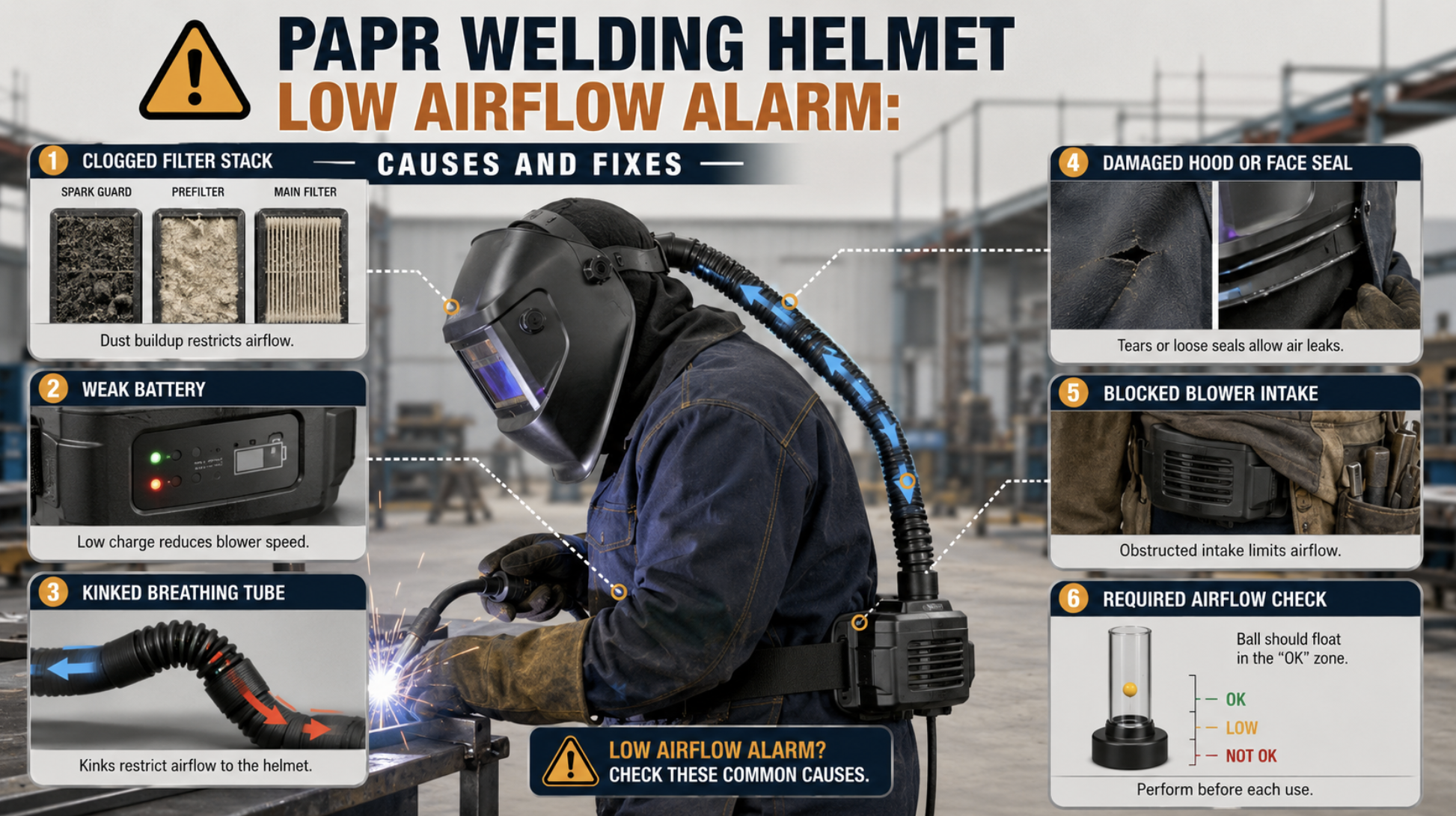
Why a PAPR Welding Helmet Low Airflow Alarm Keeps Going Off
A PAPR welding helmet’s low airflow alarm usually means the blower cannot deliver the required air volume through the hood, breathing tube, filter stack, or battery-powered blower system. The most common causes…
-
Welding Safety Equipment Inspection Checklist for Shop PPE
Routine PPE inspection helps reduce welding injuries, exposure incidents, arc flash risk, burns, respiratory hazards, and equipment-related downtime. This checklist is designed for fabrication shops, maintenance departments, welding booths, and industrial welding…
-
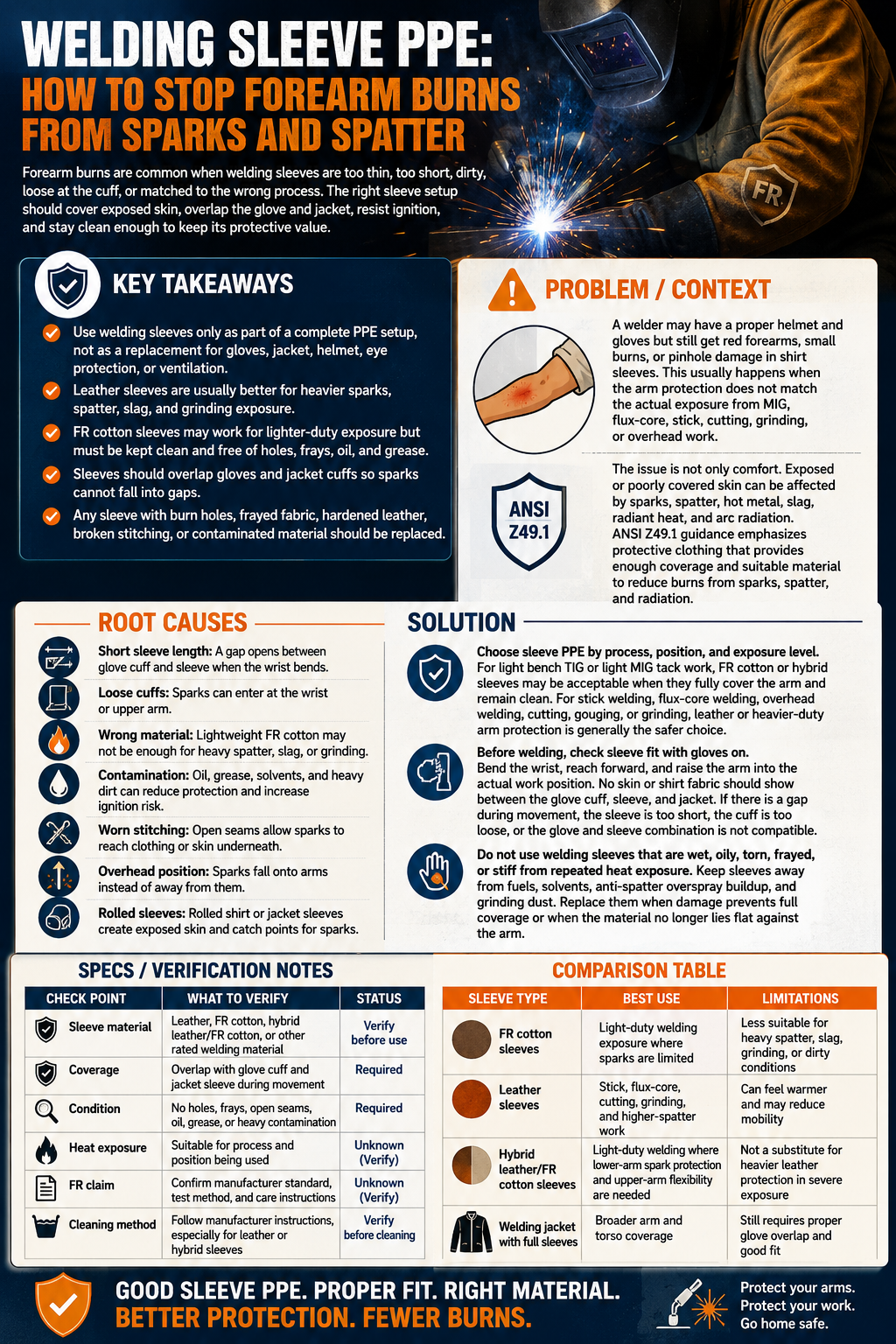
Welding Sleeve PPE: How to Stop Forearm Burns from Sparks and Spatter
Forearm burns are common when welding sleeves are too thin, too short, dirty, loose at the cuff, or matched to the wrong process. The right sleeve setup should cover exposed skin, overlap…
-
Best Low-Profile Welding Respirators That Fit Under a Hood
A welding respirator can have the right filter rating and still fail in the shop if it pushes the hood outward, breaks the face seal, fogs the lens, or blocks the view…